Signs your house needs repiping
- Pinhole leaks that keep appearing in different places.
- Brown or rusty water, especially after the house has been unused for a few hours.
- Water pressure that has fallen at every fixture.
- Visible green or white corrosion on pipes and fittings.
- Galvanized steel pipes, recognizable by their gray color and threaded ends.
One leak does not mean a house needs repiping. A cluster of them, or a line that is visibly corroded throughout, usually does. We look at the whole system before suggesting it.
What we do before recommending a repipe
We trace the supply lines, identify the pipe material, check static pressure and flow and look at the condition of the fittings. If the leaks are isolated, we repair them and say so. Sometimes a partial repipe of one wing or one run is enough.
To find where leaks are now, we may use the tools described on our leak detection page. When a pipe has already burst, our burst pipe repair service stops the damage while we plan the larger job.
The California Plumbing Code, which is based on the Uniform Plumbing Code (UPC), permits several pipe materials, including copper and PEX, subject to local rules. Choose the material with your plumber based on your water and your house.
Copper or PEX
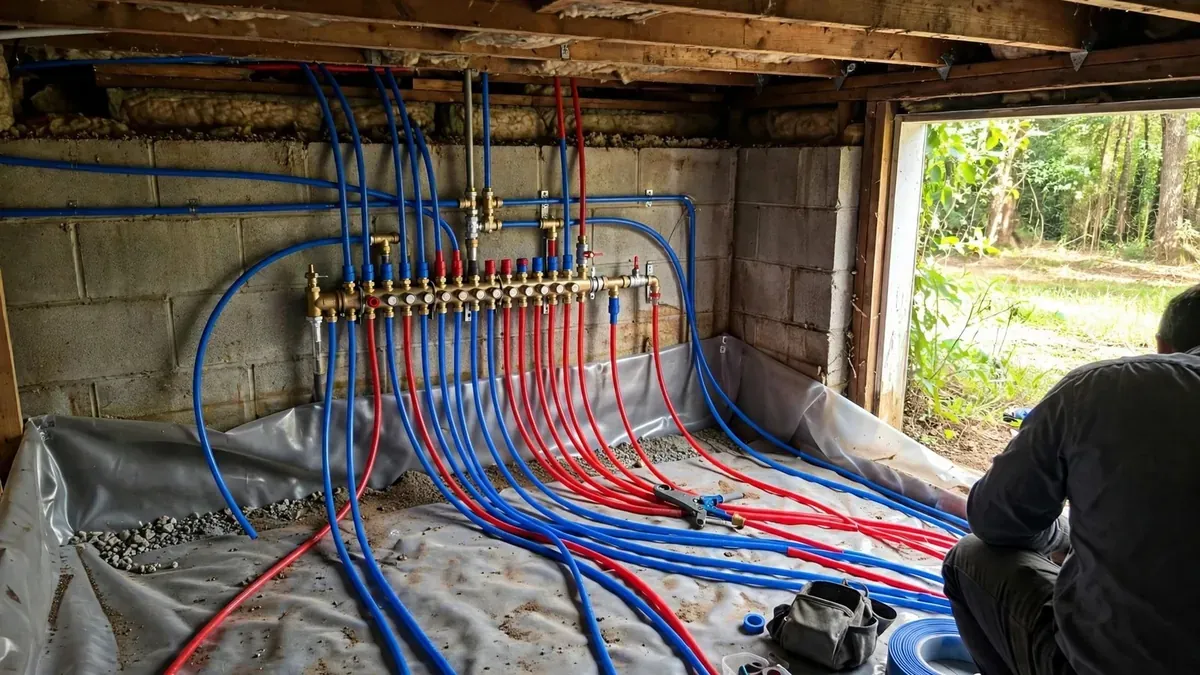
Both materials work, and the better choice depends on the house and the budget. Copper is long-lasting and resists heat. It costs more and takes longer to install. PEX is flexible and can be run with fewer fittings and fewer openings in the wall, and it handles minor movement well. Local water chemistry matters for copper, and we explain it before you decide.
| Factor | Copper | PEX |
|---|---|---|
| Installation | Soldered joints, more labor | Fewer fittings, quicker runs |
| Wall openings | More | Fewer |
| Water chemistry | Sensitive to aggressive water | Not affected by corrosion |
| Sunlight | Fine outdoors | Must be protected from UV |
Time to look at your pipes?
Call (626) 898-6169. We inspect first and tell you honestly whether repiping is needed.
What a repipe day looks like
- 01
Plan
We map the new route and decide where walls will be opened.
- 02
Shut off and open
Water is off for the work, and small openings are cut at key points.
- 03
Run new lines
New pipe replaces the old, connected to fixtures and the main.
- 04
Test and restore
We pressure-test, restore water, check every fixture and tell you what to patch.
Patching and painting the openings is a separate trade, and we tell you where the openings will be before work begins.
Why Temple City houses come up for repiping
The city's housing element shows that 57.7 percent of homes are more than 60 years old, and the 1950s are the largest decade at 30.6 percent. Depending on the builder and later remodels, a house of that age may have galvanized steel, early copper or a mix of repairs from different decades.
Water chemistry adds to the wear. Golden State Water's South San Gabriel system averaged about 240 mg/L of hardness in 2025, and scale in galvanized pipe narrows it year by year, which is why pressure falls before the first leak appears.
Because 88.1 percent of Temple City's housing units are single-family houses, repiping is usually a whole-house project on a single lot. Permit rules vary by job, so ask the Temple City building department what yours needs.
What decides the price of repiping
Homeowner's insurance does not usually cover repiping done for age, though it can pay for water damage from a sudden leak. Want your real number? Call (626) 898-6169. The plumber states the price before work starts.
Questions we get asked
Isolated leaks on otherwise sound pipe can be repaired. A series of leaks, pervasive corrosion or falling pressure usually means the pipe is wearing out everywhere.
It depends on the house. Many take a few days. We tell you the plan and how long water will be off when we assess the job.
PEX is approved for potable water in California plumbing code and is widely used. We use fittings made for the pipe and follow the manufacturer's instructions.
If the cause is clogged galvanized pipe, yes. If the cause is a failed regulator or a service line problem, we find that first.
Permit rules vary, so ask the Temple City building department. We can tell you what the work involves.